Choose Matte, Satin, or Gloss Car Wrap by the Reflections You Want
PhotosLux ·
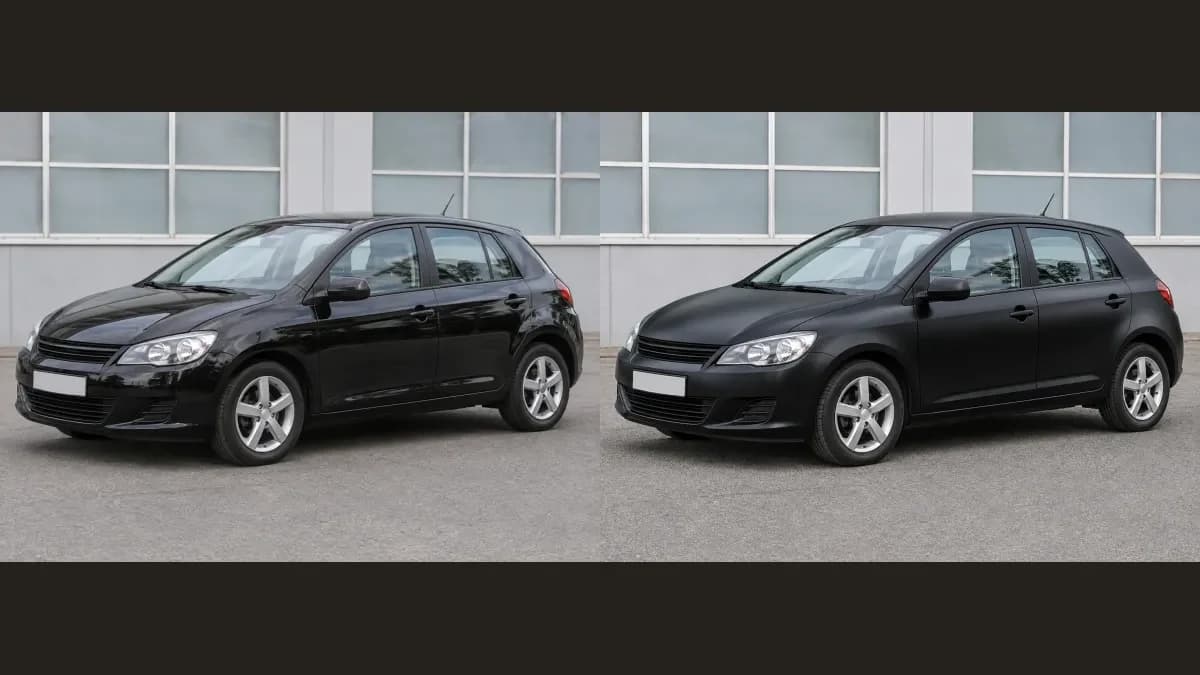
Choose gloss when you want reflected shapes to look more defined, satin when you want a softer sheen, or matte when you prefer a flatter, lower-sheen appearance. These are visual directions rather than universal material ratings, and a screen preview cannot replace comparing real samples in consistent light.
Start with the reflection you want
Choose gloss if you like clear, structured reflections of windows, sky, or nearby shapes across the body panels. Gloss usually makes highlights look more sharply defined, so it suits a preference for a brighter, more polished appearance that visibly follows the car's contours.
Choose satin if you want reflections to remain visible but look softer and less sharply outlined. It is a useful middle direction when a glossy surface feels too mirror-like, while a flatter appearance feels too subdued. Satin is not a color; it describes the surface appearance of reflected light.
Choose matte if you prefer a flatter, lower-sheen look with less visibly defined reflected shapes. Matte does not mean literally reflection-free, and its appearance can still change with the surrounding light, the body shape, and the viewing angle.
Three concrete preference cases
Gloss case: “I want the facade and sky to read as defined shapes across the hood and doors. I like visible highlights and a polished appearance, so gloss is my starting finish.” This is a reflection preference, not a statement about a particular film, gloss rating, or installation result.
Satin case: “I want the car's contours and changing light to remain readable, but I do not want sharply outlined reflections. I prefer a soft, restrained sheen, so satin is my starting finish.” This is the practical middle choice for someone comparing satin versus matte car wrap appearance.
Matte case: “I want reflected surroundings to be visually quiet and less sharply defined. I prefer a flatter, lower-sheen body appearance, while understanding that some reflection will remain.” This identifies the desired visual effect without claiming that every matte material behaves identically.
Keep color separate from finish
Black is a color. Gloss, satin, and matte describe how that color presents reflected light. “Satin black” therefore combines a color preference with a finish preference, while “matte blue” does the same. Decide both parts separately so a darker or lighter preview does not accidentally change your judgment about sheen.
A generated highlight, screen grayness, or apparent darkness is not a calibrated film color or a physical material sample. Compare like with like: request the same color family, view candidate samples under consistent available light, and observe whether reflected shapes look sharp, softened, or visually quiet. Do not treat a screen preview as proof of the actual vinyl color, finish, durability, or installation outcome.
Worked decision: black car, softer reflections
A fictional owner likes the body color black but dislikes sharply defined reflections from buildings and sky. Their filled decision is: Color: black. Finish: satin. Light: consistent available light. Sample: request a real satin-black candidate. Observation: keep the car's body reflections readable, but prefer softer edges and lower visual sharpness. Decision: satin black is provisional until the real sample is inspected.
The unresolved parts matter. The screen concept does not establish which physical film matches the appearance, whether the displayed black matches the owner's car, or how the material will look in other lighting. The decision is useful because it narrows the conversation to one color and one reflection direction without pretending that the preview is a material test.
Reusable sample-comparison card
Copy this card for each real sample discussion: Color: [same color for every candidate]. Finish: [gloss, satin, or matte]. Real sample: [candidate sample to request]. Light: [same available light or viewing condition]. Observation: [how sharply the surroundings reflect; how soft or quiet the highlights look]. Decision: [provisional choice, reject, or compare again].
Use a simple same-color, same-light exercise. Place the samples beside one another, view them from the same angle, and look for the reflection behavior you actually want rather than judging only the printed color name. Check them near broad bright shapes and darker surroundings if both conditions are available. The purpose is to improve the conversation, not to create a universal rating.
One satin-black PhotosLux concept
In PhotosLux Car Wrap, one synthetic glossy-black hatchback is used as the input. The selected operation requests only a satin-black body finish with a soft low sheen. The separate preferences ask to keep the same hatchback, body shape, windows, wheels, lights, blank plate, parked position, view, daylight, and background recognizable. The request field is: “Apply a satin black finish to the car body, with a soft low sheen. No decals or graphics.” Choose the Satin black catalog option. The request allows up to 200 characters and separate extra preferences up to 300; framing follows the uploaded image automatically.
Inspect the actual result for the full vehicle, roof, nose, rear, both visible silver wheels, windows, lights, blank plate, body proportions, and outdoor framing. Read the body reflections as an illustration of the satin request. This is one satin-black result beside one glossy-black synthetic source, not a controlled gloss, satin, and matte comparison. Both images are AI generated, not a customer before-and-after, physical wrap, calibrated color sample, installation proof, or guarantee.
Illustrative example
Illustrative example: a softer satin-black body appearance
The synthetic input shows one fictional unbranded compact black hatchback parked on gray asphalt before a light-gray industrial facade under soft overcast daylight. Its full body, roof, nose, rear, windows, lights, blank plate, and both visible silver wheels are visible. Car Wrap requests satin black with a soft low sheen while keeping the vehicle, view, background, and daylight recognizable. The source and result are AI generated, not a customer before-and-after or physical film comparison; outcomes vary.

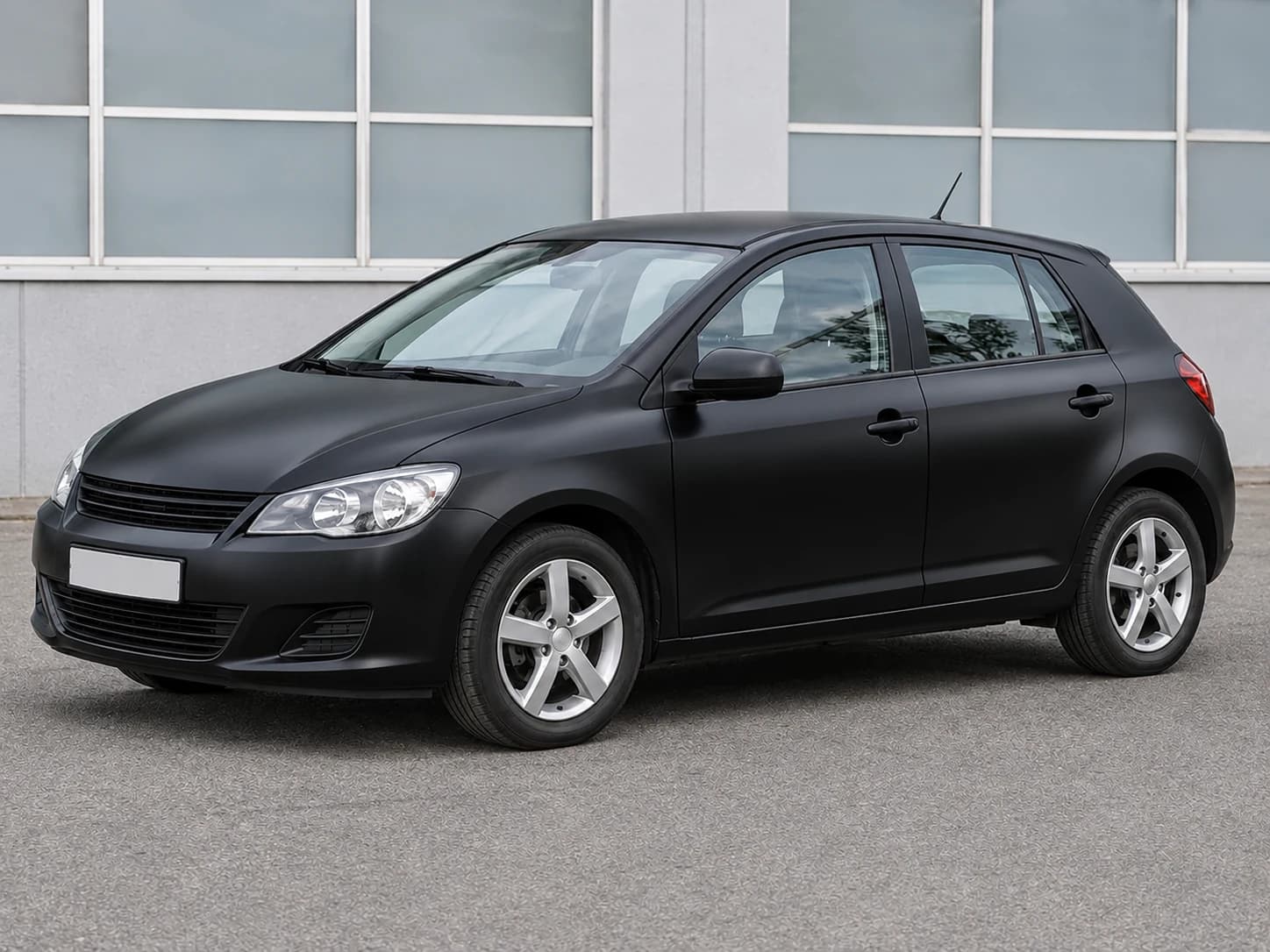
Apply a satin black finish to the car body, with a soft low sheen. No decals or graphics.
Both images are AI generated and show the fictional car and setting described in this example. This is an illustrative example, not a customer before-and-after photo or physical wrap; outcomes vary.
FAQ
Is satin a color or a finish?
Satin is a finish. Black, blue, red, and similar terms describe color. A phrase such as “satin black” combines the black color with the satin reflection appearance.
Does one preview show what matte, satin, and gloss will all look like?
No. One generated result illustrates one requested appearance only. It cannot establish a controlled three-finish comparison, so compare real same-color samples when the material decision matters.
Can screen color or a generated reflection prove a real vinyl material?
No. A preview can help you describe the reflection direction you prefer, but it does not prove calibrated color, physical film, durability, installation quality, or the result on your vehicle.