Natural vs. Editorial vs. Cinematic Portraits: Choose by Purpose and Tradeoff
PhotosLux ·
Choose natural for an understated appearance, editorial for a deliberately polished presentation, or cinematic when atmosphere and depth matter most. None is universally best: the right PhotosLux treatment depends on how you want the portrait to come across, and each involves a tradeoff.
1. Choose the treatment separately from the scene
A scene describes where the portrait takes place; a treatment describes its overall photographic presentation. A quiet waiting room, for example, could be presented in any of the three styles. Outfit, setting, extra preferences and image format are separate choices too.
Use this compact rule: choose natural when restraint matters, editorial when polish is the point, and cinematic when mood should be noticeable. These are intended creative directions, not fixed guarantees. PhotosLux makes a new scene from an uploaded identity reference, and the result can vary, so review the finished portrait before using it.
2. Natural: keep the presentation understated
Natural aims for realistic-looking light and color, visible skin texture and subtle retouching. Choose it when you want a restrained portrait that does not call attention to a highly styled treatment. For instance, an everyday profile image may benefit from a straightforward, low-key appearance.
Purpose / choice / tradeoff: understated presentation / natural / it may feel less visibly polished or dramatic than the other options. Natural does not mean unedited documentary truth: the image is synthetic, and the treatment does not guarantee an exact likeness.
3. Editorial: make the polish part of the portrait
Editorial aims for a deliberate, magazine-like presentation, with shaped lighting and refined color. Choose it for a styled creative portrait where a considered, polished impression is welcome. Think intentional visual finish rather than an everyday snapshot.
Purpose / choice / tradeoff: styled creative presentation / editorial / the result can feel more staged than a restrained portrait. The label describes a visual treatment; it does not mean the image was published by a magazine, comes with stock editorial-use licensing, or proves anyone's credentials.
4. Cinematic: prioritize atmosphere and depth
Cinematic aims for depth, soft directional light and film-like color. Choose it when the portrait should carry a distinct atmosphere, while keeping the person's face readable. It does not have to look dark, and it is not a real film still or a recreation of a named movie.
Purpose / choice / tradeoff: mood-led presentation / cinematic / atmosphere can become distracting if the face is hard to read. Check that the expression and skin remain visible at a glance rather than judging the portrait by mood alone.
5. Try one scene with three different intentions
Imagine one fictional adult beside a rain-softened window in a quiet waiting room, wearing a camel cardigan over a navy top. Keep that scene constant and change only the intended presentation. Choose one line: “Understated everyday color and a natural-looking finish.” “Deliberately styled, magazine-like polish.” “Atmospheric, film-like depth with a clearly readable face.” These short intent lines help make the distinction concrete without prescribing a technical recipe.
Pick one direction before generating a new scene. Combining all three can ask for conflicting presentations. Then review skin texture, face readability and whether the treatment fits your purpose. Outfit, scene and 3:4, 1:1 or 4:3 format remain independent choices. This exercise is not a controlled comparison; only the cinematic example below is shown, and results can vary.
Illustrative example
Illustrative cinematic window portrait
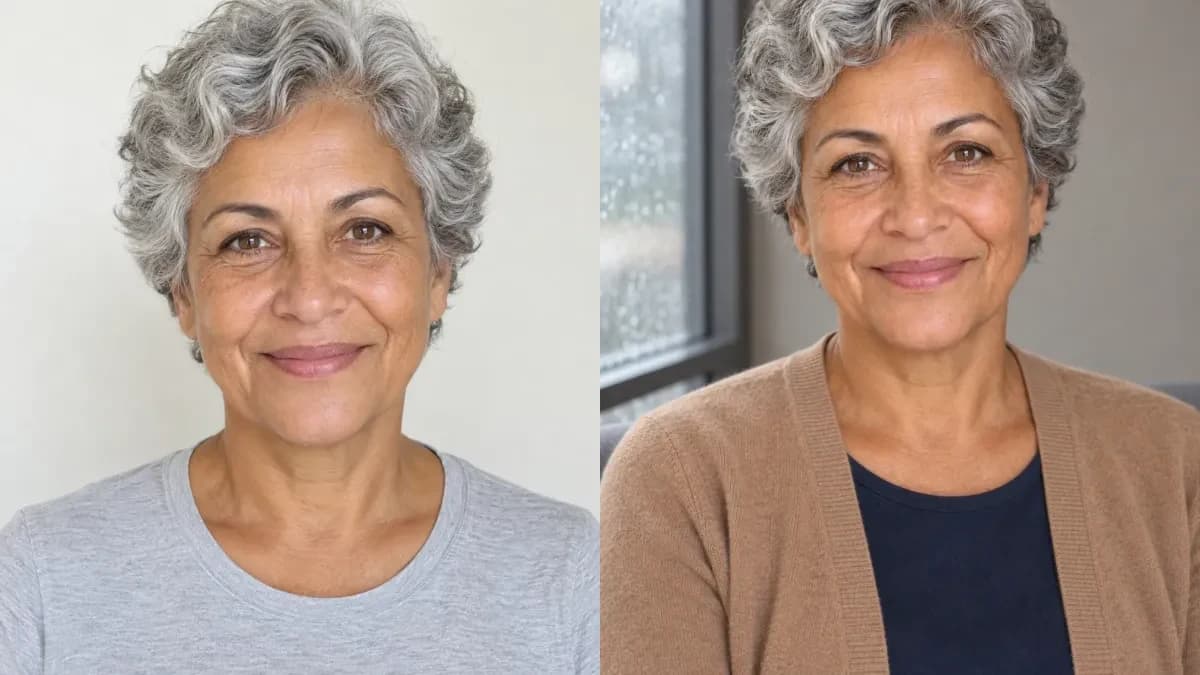
This illustrative example shows one fictional 61-year-old woman, not a customer. Her synthetic reference has short silver-gray curls, medium olive skin, natural age lines and a pale-gray T-shirt. The new PhotosLux result is a cinematic 3:4 upper-body portrait in a fictional quiet waiting room beside a rain-softened window. She wears a plain camel knit cardigan over a deep-navy round-neck top. Her full head and both shoulders are centered, with a gentle smile, readable face and realistic skin texture. Cool gray window light and restrained warm interior atmosphere add subtle depth; her hands are outside the frame. Both images are AI generated. This illustrates cinematic only, not a three-treatment comparison.
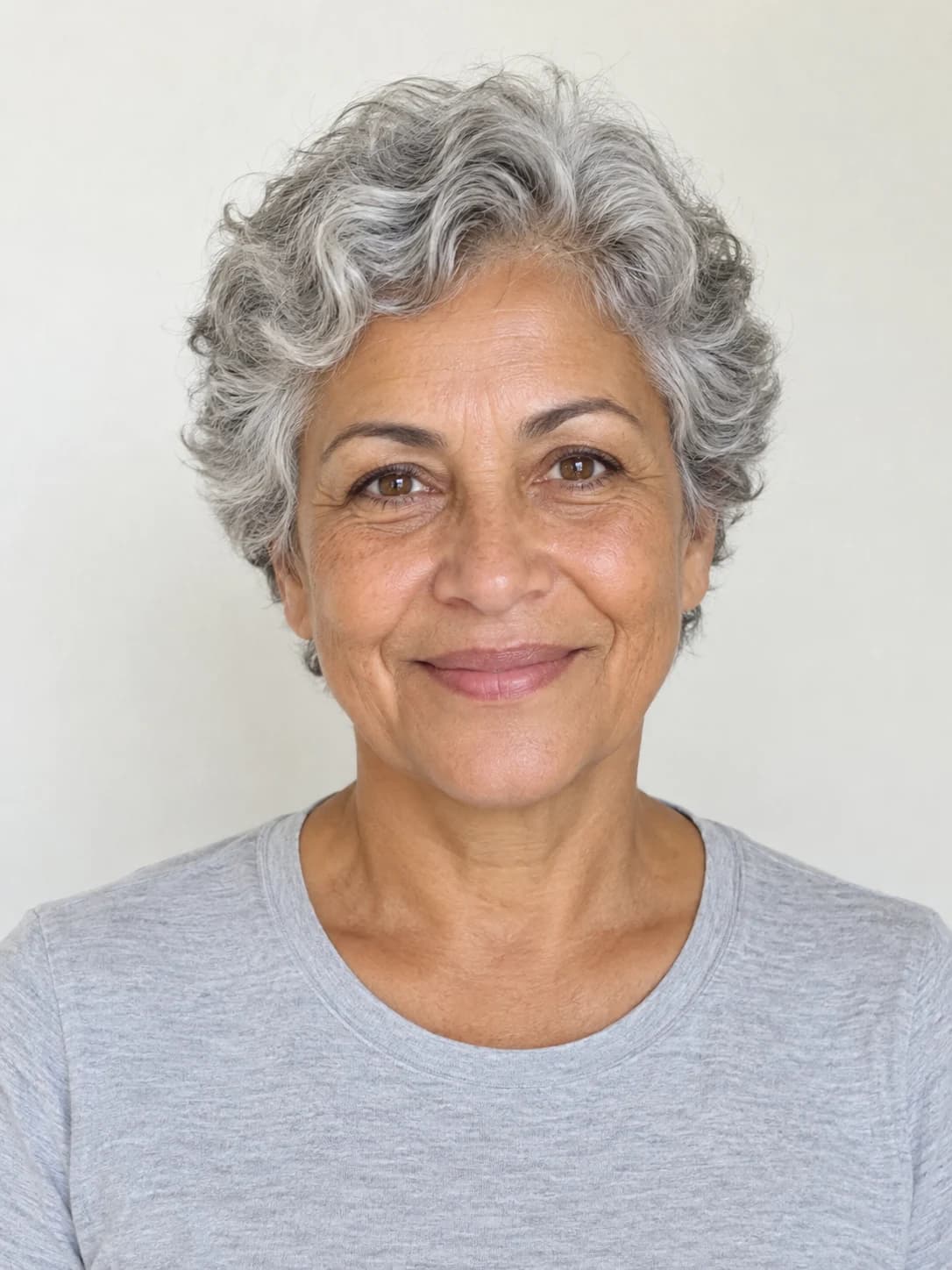
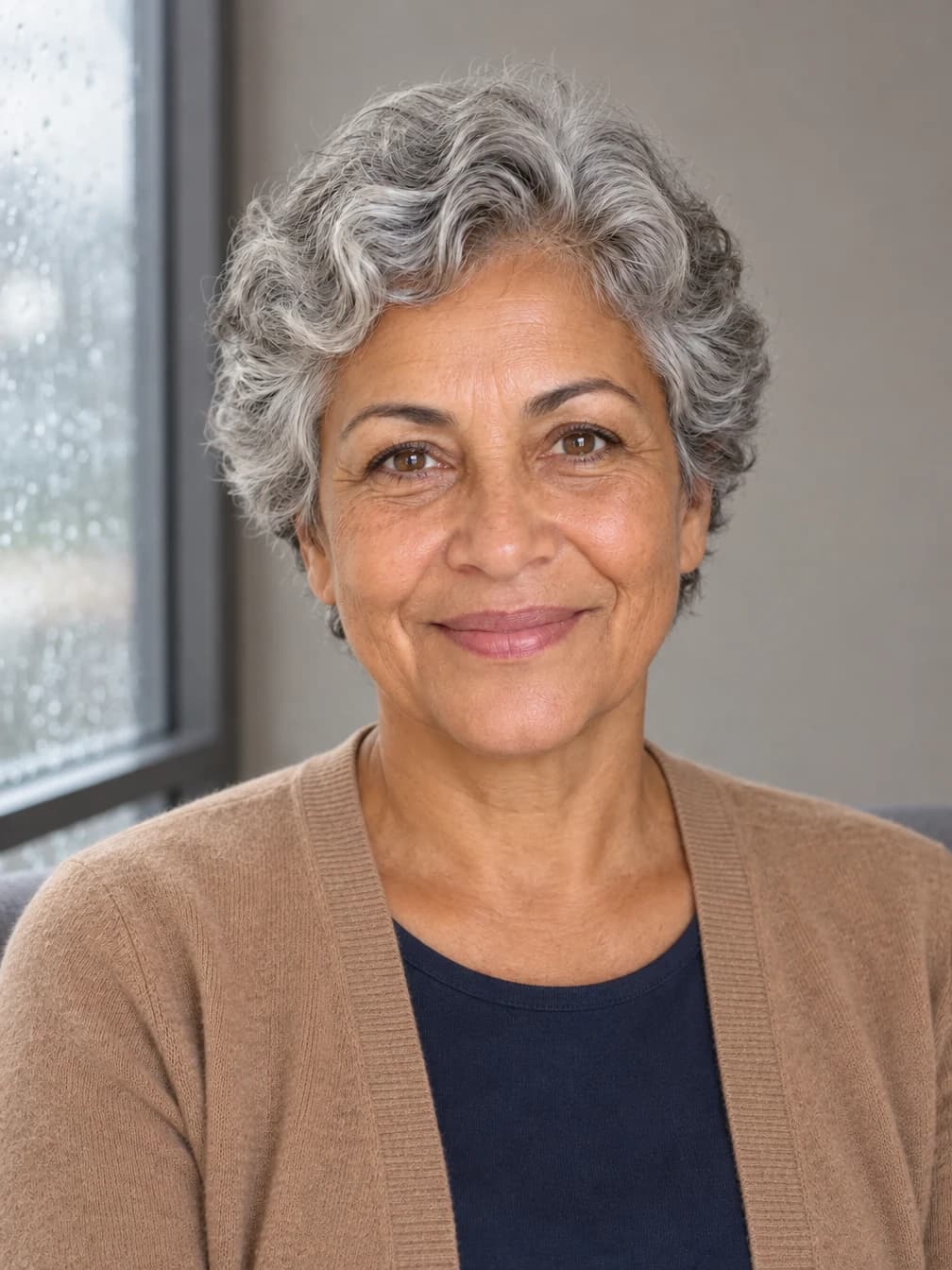
Create one new cinematic 3:4 upper-body portrait of one adult woman in a quiet fictional waiting room beside a large rain-softened window, with a plain warm-gray wall and no signs. She wears a plain camel knit cardigan over a plain deep-navy round-neck top. Center her full head and both shoulders comfortably within the frame, looking toward the camera with a gentle natural smile. Keep her face clearly readable and skin texture realistic. Use soft cool gray window light, restrained warm interior atmosphere and subtle depth. Keep hands outside the frame. No held objects, foreground furniture, signs, lettering, logos, jewelry, watermark or dramatic darkness.
Both images are AI generated and show a fictional adult. This is an illustrative example, not a customer result; outcomes vary.
FAQ
Does natural mean unedited?
No. Natural is an intended visual direction: realistic-looking light and color, visible skin texture and subtle retouching. The portrait is still AI generated, not documentary evidence, and an exact likeness is not guaranteed.
Does editorial mean published or licensed?
No. Editorial describes a polished, magazine-like presentation. It does not establish publication, stock editorial-use licensing or professional credentials.
Does cinematic have to look dark?
No. Cinematic aims for atmosphere, depth, soft directional light and film-like color. The face should still be clearly readable.