Smart Casual or Business Casual? Three Complete Outfit Examples
PhotosLux ·
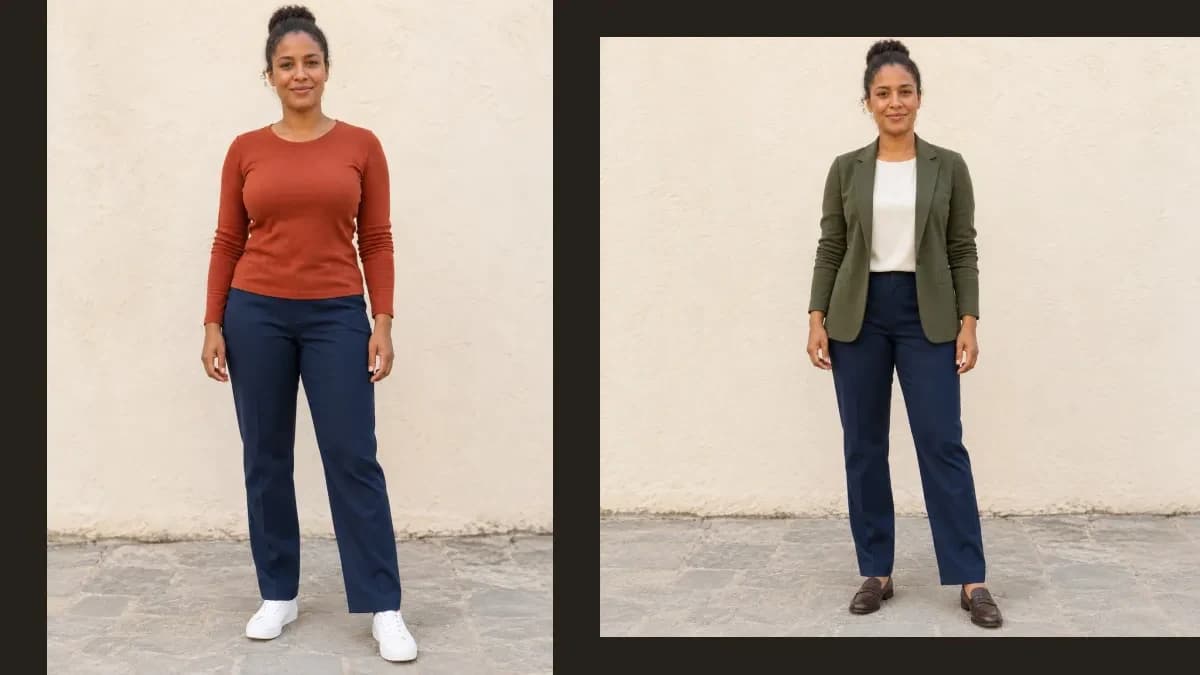
Smart casual and business casual overlap, and their meanings vary by workplace, host, and occasion. Business casual usually suggests a work-focused look, while smart casual can mix polished and relaxed pieces; check the actual setting, then use these three complete outfits as adaptable starting points—not universal dress rules.
Relaxed social gathering: rust knit and stone overshirt
For a hypothetical daytime get-together at a relaxed café, start with navy straight-leg trousers, a rust fine-knit top, and a stone-colored overshirt worn open. Add simple, clean white shoes only if they suit the actual venue and its expectations. The knit and overshirt make a layered, considered combination without relying on a formal jacket.
The balance comes from pairing a tidy trouser-and-knit base with a more casual overshirt. If the invitation names a restaurant, club, or other venue with specific expectations, check those before choosing the shoes. This written outfit is one possible direction, not a claim that every social event uses “smart casual” the same way.
Daytime office visit: olive blazer and ivory blouse
In this fictional case, the brief explicitly says “daytime office visit” and says no suit or tie is required. Try navy trousers, an olive unstructured blazer, a plain ivory blouse, and dark-brown loafers. The tailored trousers and blazer give the outfit a work-focused shape; the softer jacket structure and simple blouse keep it from reading like a full suit.
The pieces work together through a restrained mix of colors and clear layers: navy below, ivory at the top, olive as the outer layer, and brown at the feet. This is a coherent business-casual direction for the stated hypothetical brief, not a promise that a particular employer has approved it. If you are visiting a real workplace and the standard is unclear, ask your contact.
Unclear invitation: shirt, cardigan, and closed shoes
If an invitation says only “smart casual” and gives little context, a provisional outfit could be navy trousers, a plain off-white button-front shirt, a charcoal cardigan, and simple brown closed shoes. The shirt keeps the combination neat, while the cardigan adds a relaxed layer without making the whole outfit depend on a blazer. The closed shoes give this example a more finished feel, but footwear expectations vary by host and venue.
Use the setting to decide whether this direction is enough: a casual daytime gathering may call for a different level of polish than an evening event or a workplace reception. If the detail matters, ask the host: “Would a cardigan and closed shoes be appropriate, or should I wear a blazer?” Adjust the outfit to the answer rather than treating the label as a fixed rule.
Preview one combination, then confirm the brief
These recipes are appearance ideas you can adapt using clothes you already own; they do not establish dress-policy compliance, physical fit, or what a host or employer will accept. If the requirement remains uncertain, ask the workplace contact or host directly before relying on a preview.
To preview the office-visit combination in PhotosLux, use one clear full-body photo that includes both complete shoes. A half-body photo cannot show the footwear for this complete outfit. In Outfit Try-On, enter: “Keep the navy trousers. Add an olive unstructured blazer over a plain ivory blouse and dark-brown loafers. No bag, jewelry, text or logos.” In the separate optional Custom instructions field, you could write: “Keep the same adult, body shape, pose, hands, background and view. No slimming, retouching, props or writing.” These are requests, not exact-preservation guarantees. No preset or second reference is needed for this example.
The clothing transform shows one generated outfit concept, not all three written recipes, a physical fitting, measured sizing, or workplace approval. Framing is automatic, so inspect the actual result and its dimensions; do not assume it will have the same aspect ratio as the source.
Illustrative example
Illustrative example: one office-visit outfit concept
The synthetic source is a full-body image of a fictional adult wearing a rust crew-neck top, navy trousers, and white canvas shoes. Outfit Try-On requests an olive unstructured blazer, plain ivory blouse, and dark-brown loafers while keeping the navy trousers. The separate preferences ask to retain the recognizable adult, pose, body shape, and background. Inspect the complete result, including shoes and clothing changes. Both images are AI generated; this is one outfit concept, not a physical fitting or workplace approval.
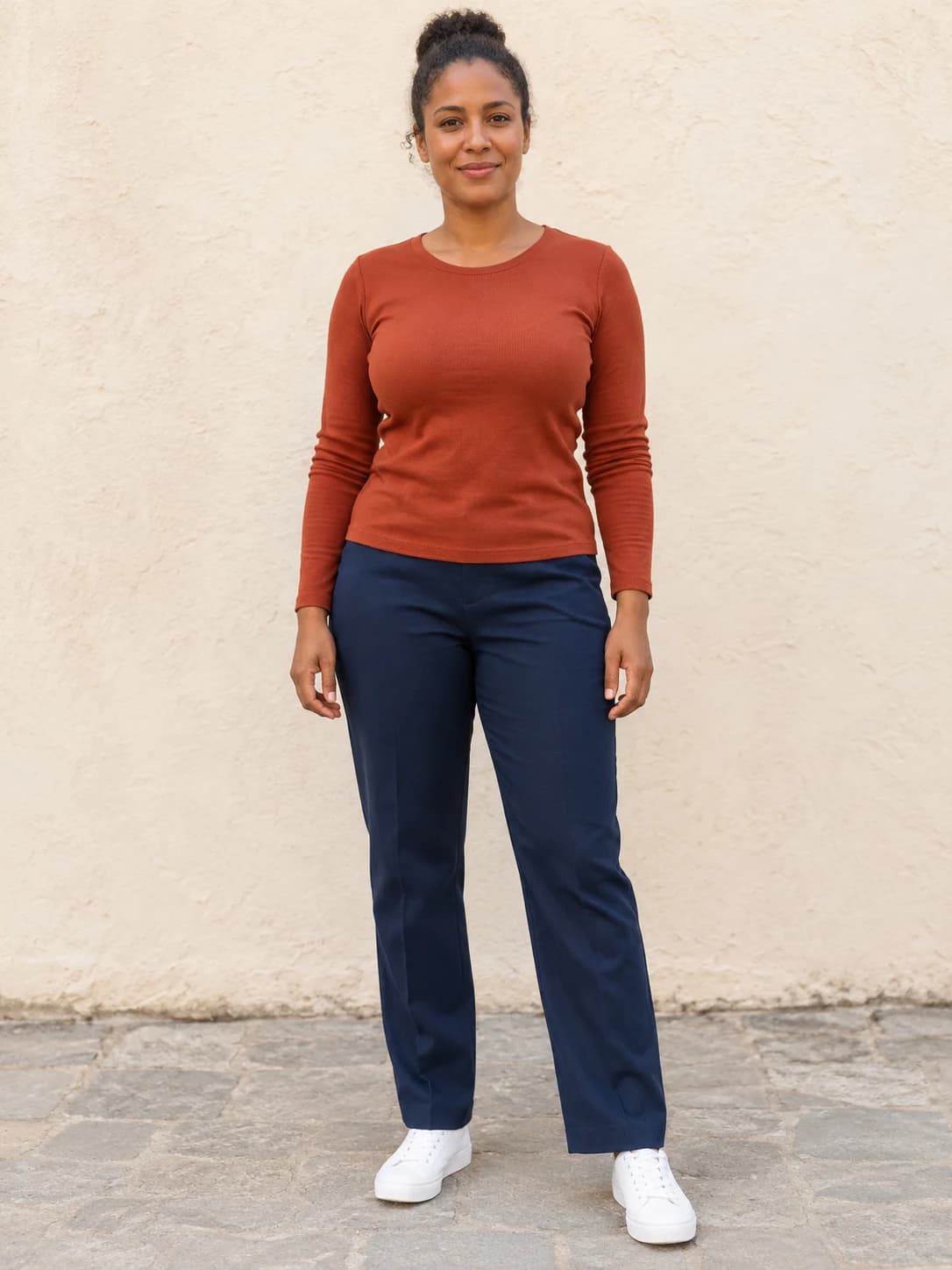
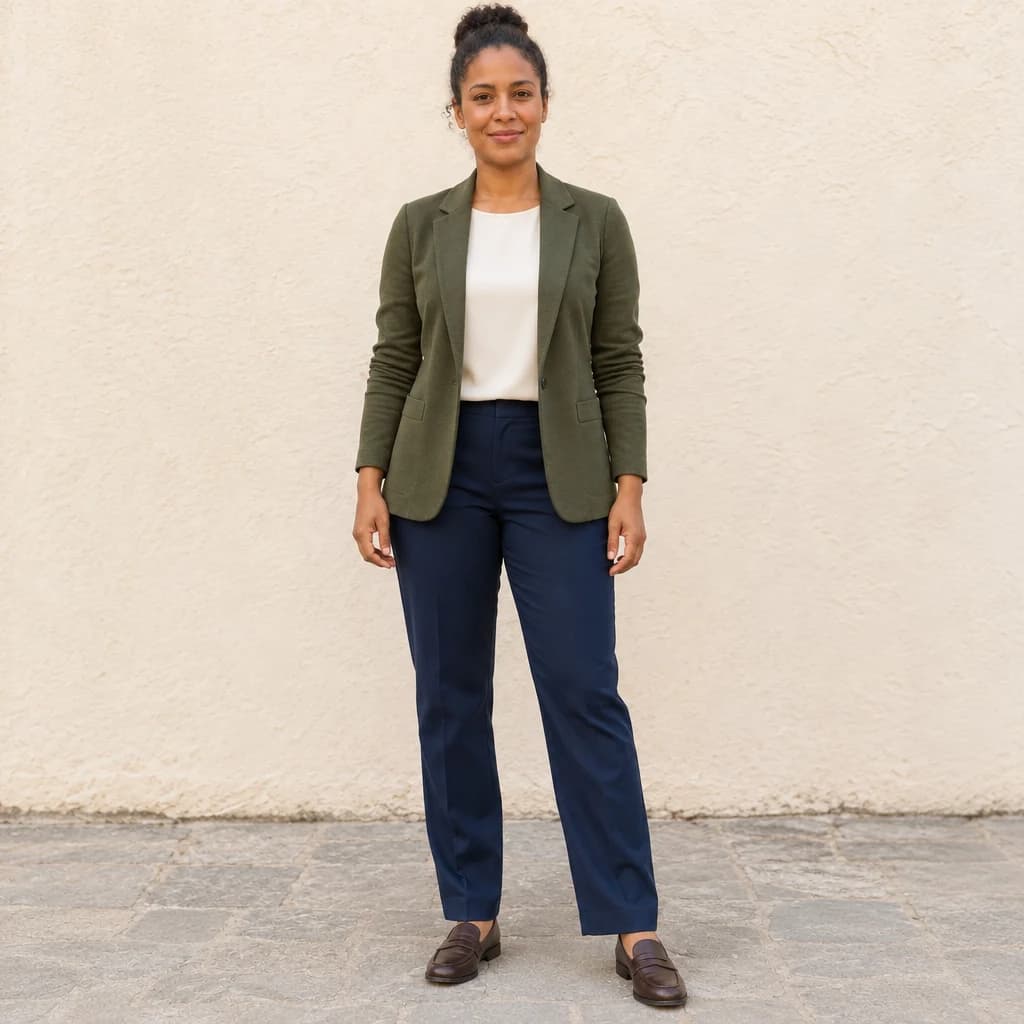
Keep the navy trousers. Add an olive unstructured blazer over a plain ivory blouse and dark-brown loafers. No bag, jewelry, text or logos.
Both images are AI generated and show the fictional person and outfit described in this example. This is an illustrative example, not a customer result; outcomes vary.
FAQ
Do smart casual and business casual mean the same thing everywhere?
No. The terms overlap, and workplaces, hosts, and venues may use them differently. Treat the label as a clue, then check the actual setting or ask the person who set the dress code.
What should I wear if an invitation says smart casual but gives no details?
Use the venue and occasion to choose a provisional outfit, such as navy trousers, an off-white button-front shirt, charcoal cardigan, and brown closed shoes. Ask the host if you are unsure whether a blazer is expected.
Does an Outfit Try-On preview prove the clothes fit or meet a dress code?
No. It creates one visual clothing concept. It does not measure fit, confirm workplace or venue requirements, or show that a host or employer has approved the outfit.