Turn a Rough Sketch Into a Photographic Scene
PhotosLux ·
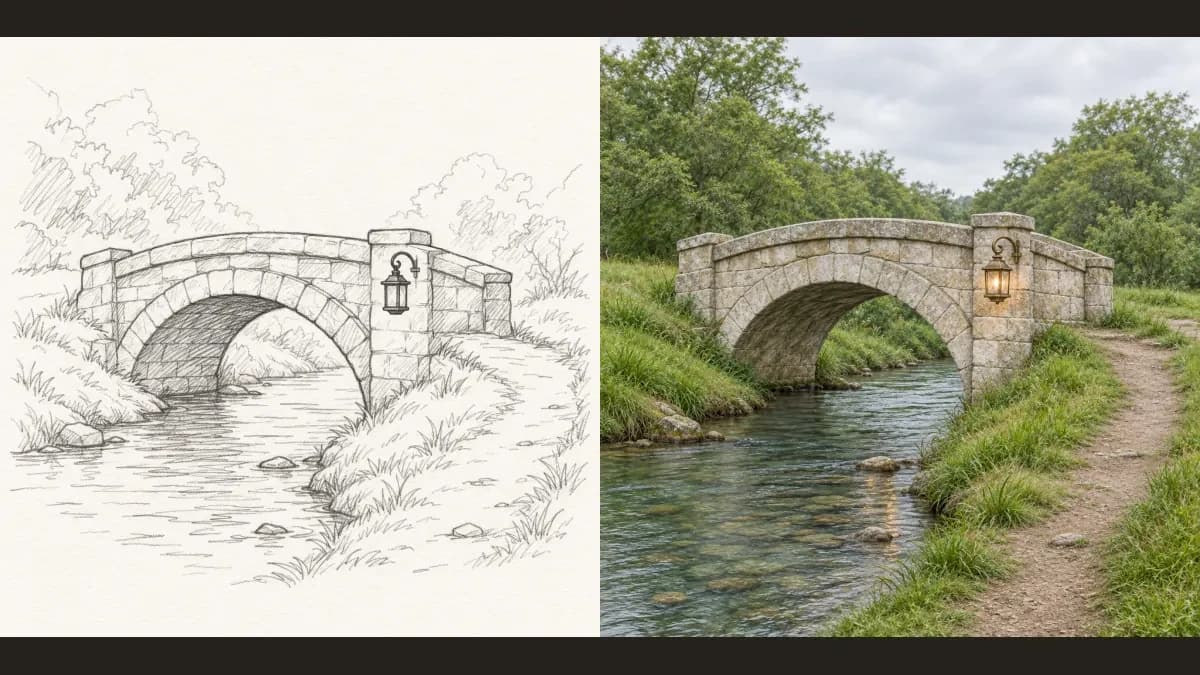
A rough scene sketch can become a coherent photographic concept when you decide what its lines mean and choose the materials and light they leave open. The result is an interpretation, not a recovered photograph or proof of the sketch’s original intent.
Separate drawn structure from chosen appearance
Imagine a rough drawing of a low arch crossing a narrow stream. The arch opening, two banks, a path on the right and a hanging mark are visible composition cues. They give you a starting arrangement, but they do not establish whether the bridge is stone or wood, what the water looks like, or what the hanging object is made of.
Write down two kinds of decisions before turning the sketch into a photo: what the lines appear to show, and what you are choosing to add. For this scene, the arch, banks, path and downstream view are drawn priorities. Pale stone, blue-green water, brass, glass and a particular kind of light are invented appearance choices.
Make the ambiguous marks mean something
Read the hanging outline as a lantern, not a bell. A loop above a simple rectangular body makes a lantern a useful intentional reading for this version, but the linework alone cannot prove that interpretation. Likewise, read the short ripple marks below the arch as water, and the lines along either side as stream banks rather than grass.
If you think the hanging mark should be a bell, change the intended object in your request: ask for a hanging bell instead of a lantern. If the long lines indicate a dry path rather than water, replace the stream with a path. These are written alternatives for deciding what you mean, not additional generated comparisons.
Choose materials and light that belong together
For one complete photographic concept, choose a pale weathered stone arch, blue-green water, and a brass-and-glass lantern with a warm glow. Soft overcast daylight can illuminate the bridge and banks evenly; the lantern’s warmth then reads as a small local accent against the diffuse daylight, not a second sun.
Keep the interpretation restrained. Do not add people, extra buildings or decorative objects to fill the unspecified background. The sketch does not establish the stone type, exact water color, time of day, lantern construction, location or precise dimensions. Those remain creative choices or unresolved details, not facts hidden in the drawing.
Try one concise sketch-to-photo request
Once the object meanings and appearance choices are clear, use one sketch in PhotosLux Custom Style. Upload a JPEG, PNG or WebP file up to 20 MB. In the required What should we change? field, enter: Make this sketch photographic: pale stone arch, blue-green stream, brass lantern with a warm glow, soft overcast light. Keep the arch, banks, path and view. No people, paper, text or new objects.
The request field is limited to 200 characters, so keep the chosen scene and composition priorities together there. This Custom Style example uses no separate extra-instructions field and no second reference. The optional Pick an idea gallery is available but left unselected. Framing is automatic; there are no user ratio or tracing controls. Select Show me the result to generate one interpretation.
Inspect the interpretation without treating it as evidence
Compare the result with the sketch for the chosen meaning and recognizable composition: is there one arch over a stream, with the banks, right-side path and downstream view still legible? Does the lantern read as the intended local warm accent under soft daylight? If the object meaning or composition is wrong, set the result aside rather than calling it the original intent.
Generated geometry, small details and materials remain uncertain even when they look convincing. The result is not an exact trace, a real location, a construction drawing or evidence of what the artist meant. Treat it as one fictional photographic concept, and revise your interpretation if you want to make a different creative choice.
Illustrative example
Illustrative example: a stone arch, stream and lantern
The synthetic input is a square monochrome rough sketch of one low stone-arch bridge over a narrow stream, with two banks, a right-side path and a hanging lantern outline. Custom Style turns it into one photographic interpretation, choosing pale stone, blue-green water, a brass lantern with a warm glow and soft overcast light. The arch, banks, path and view are priorities to retain. Inspect the result for composition and meaning. Both images are AI generated; choices are invented, not recovered facts.
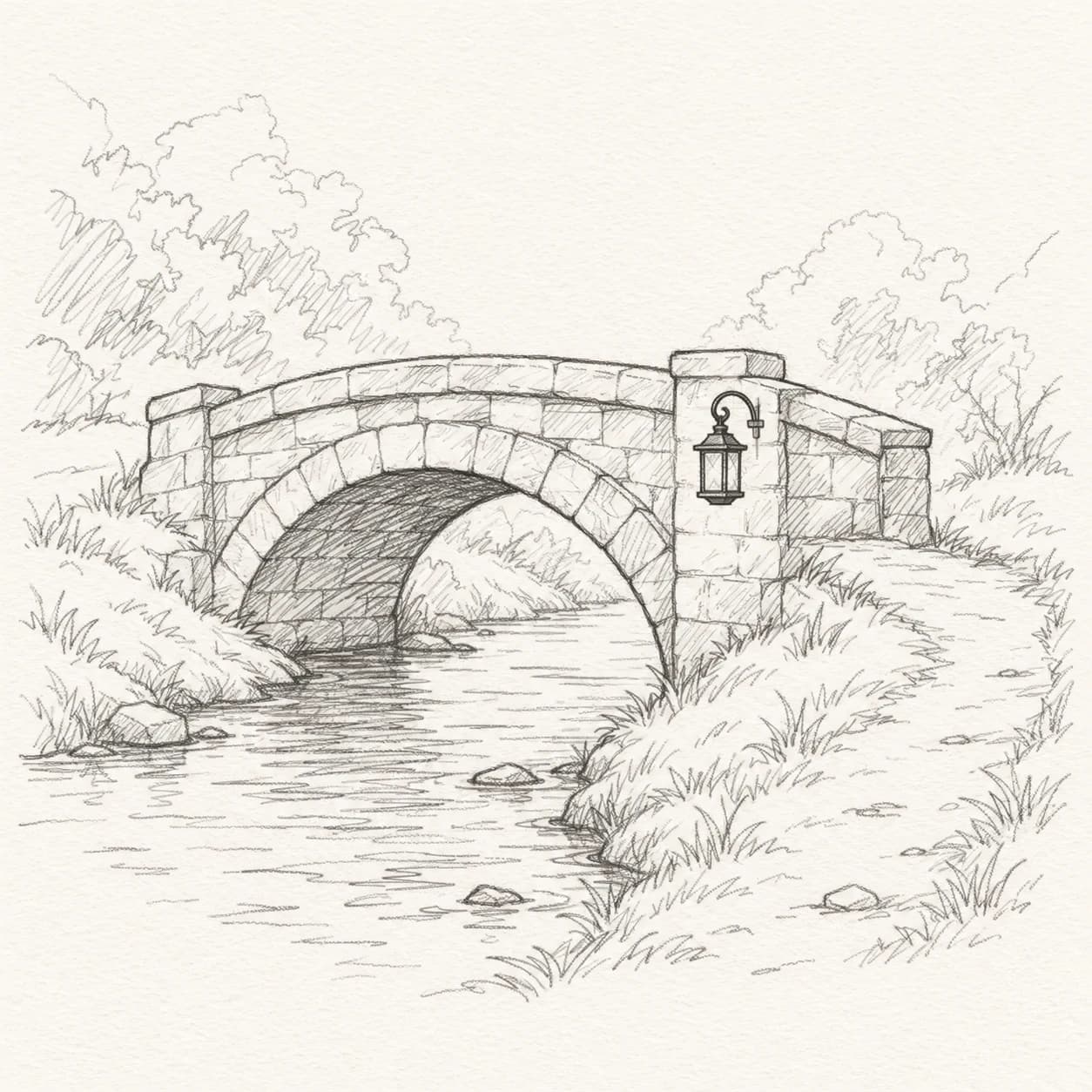
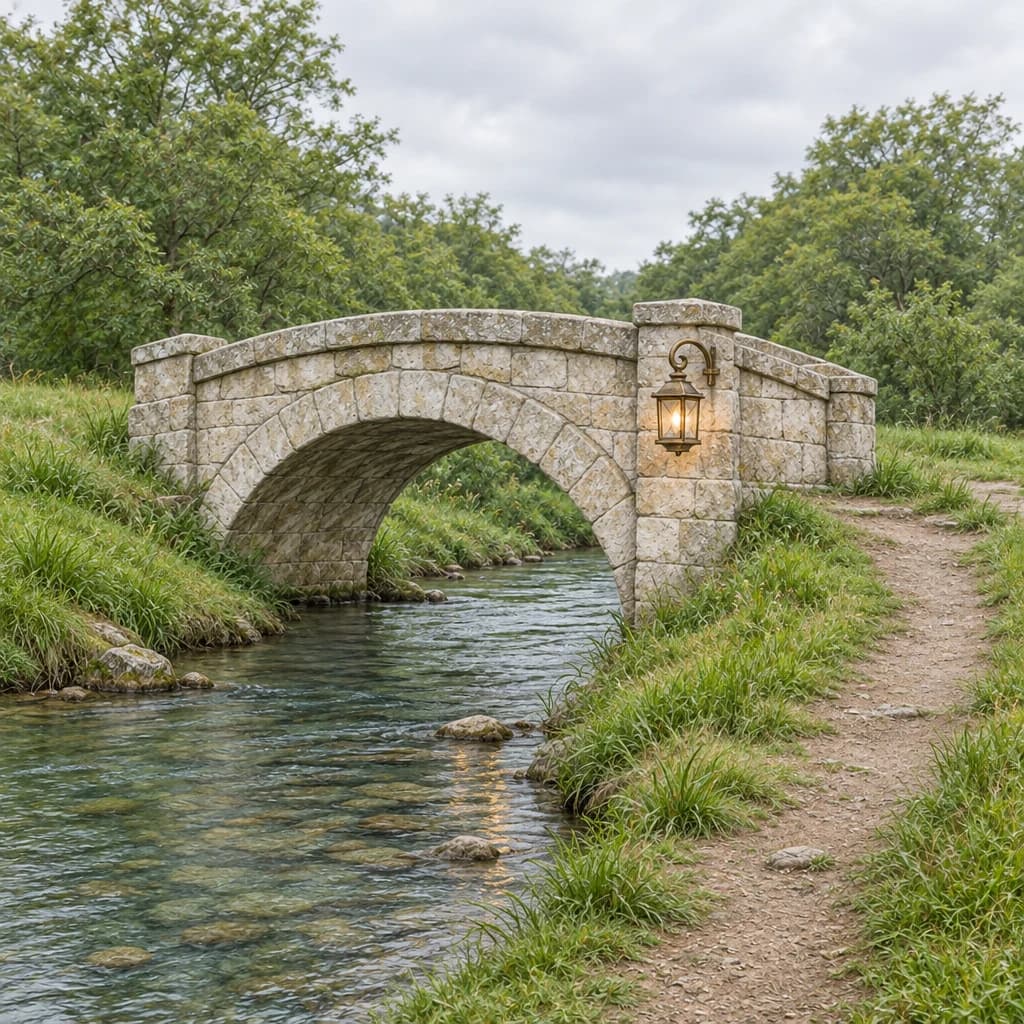
Make this sketch photographic: pale stone arch, blue-green stream, brass lantern with a warm glow, soft overcast light. Keep the arch, banks, path and view. No people, paper, text or new objects.
Both images are AI generated and show the fictional scene described in this example. This is an illustrative example, not a customer result; outcomes vary.
FAQ
Can a sketch tell me what its materials were meant to be?
Not when the drawing leaves them unspecified. Choose materials for your intended scene and treat them as interpretation, not recovered information about the sketch.
What should I do when a mark could be a lantern or a bell?
Choose the object you want before generation and name it directly. In this example, the mark is intentionally interpreted as a lantern; a bell is a written alternative, not a result shown here.
Will a photographic interpretation preserve the exact sketch geometry?
No. You can state composition priorities such as keeping the arch, banks and path recognizable, but the generated result may vary in geometry and detail. Inspect it as a creative interpretation, not an exact trace.